
Family memories are lost in two ways. The memories themselves fade or go with the person who held them, and the things that carry them (photos, tapes, letters, phones) get thrown away, damaged or forgotten in a drawer. Preserving them means working on both. Here are eight ways, starting with the one that can’t wait.
1. Record the voices first
Photos can be scanned in ten years; a grandparent’s voice can’t. Ask your oldest relatives about their lives and record the answers, with their permission. A phone is enough. Childhood memories fade, about 15% of them every decade, so start with the oldest people in the family. How to interview a grandparent covers how.
2. Label old photos while someone can
An unlabelled photo is a stranger in twenty years. Sit with a parent or grandparent and a box of photos, and write on the back (in soft pencil) or in a list: who, where, roughly when, and what was happening. Record the conversation too; looking at photos is one of the easiest ways to get someone talking.
3. Scan photos, letters and documents
A flatbed scanner gives the best quality, but a phone scanning app is fine for most prints and letters. Scan the backs of photos if anything is written on them. Name each file with the year and the people in it, so it can be found without opening it.
4. Write down the family recipes
Many family recipes exist only in one person’s hands. Cook with them and write down what they actually do, including the “a little of this”. Take a photo of any handwritten recipe card; the handwriting is a memory in itself.
5. Rescue old tapes, films and phones
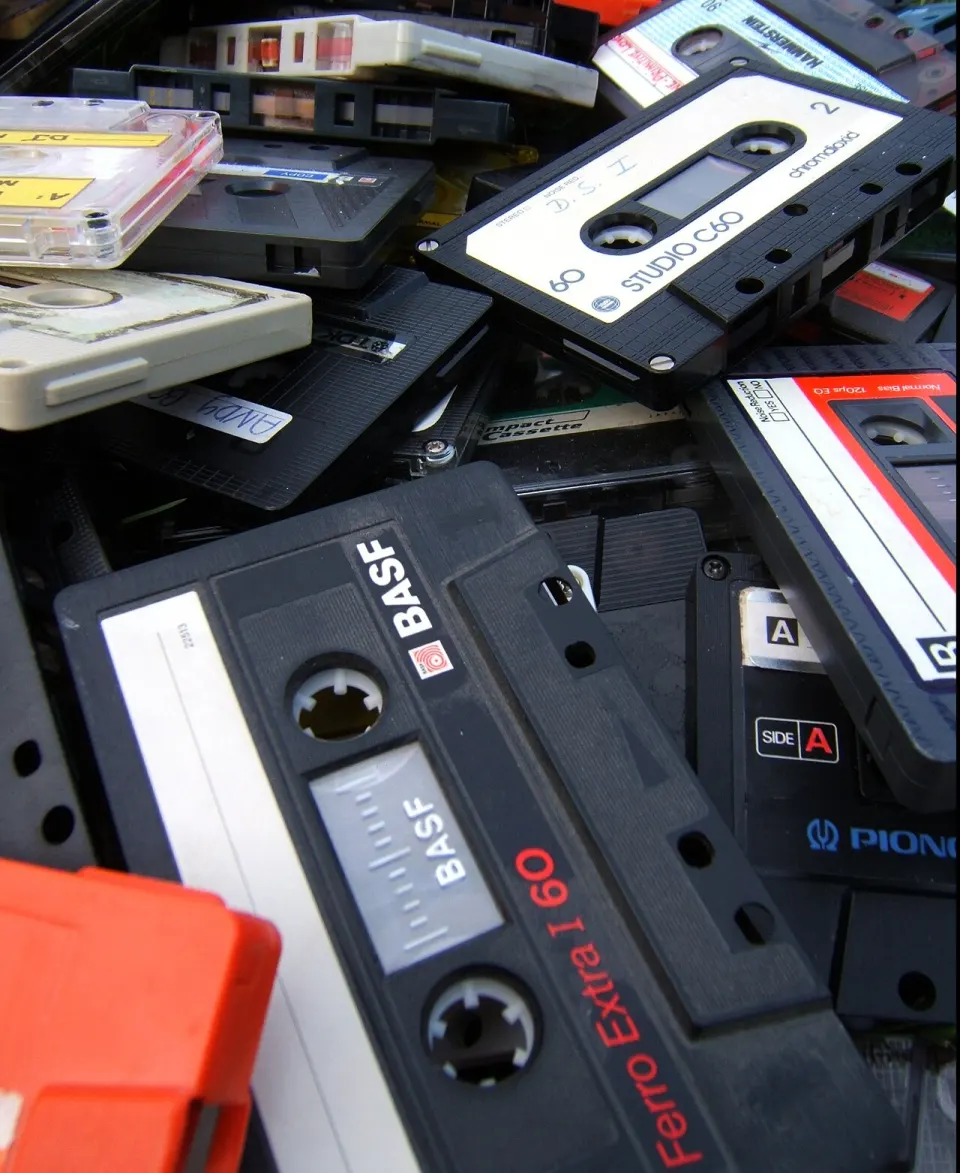
Cassette tapes, video tapes, film reels and old phones all fail over time. Have them copied to digital files, by a local service or with a borrowed player, and keep the originals until the copies are checked.
6. Start a simple family tree
Even a hand-drawn tree with names, rough dates and places gives every memory a place to hang. Ask older relatives to fill in what you don’t know, and note how each name was spelled. Family history interview questions can help.
7. Keep more than one copy
A simple rule many archivists use is three copies, on two kinds of storage, with one kept somewhere else. In practice: the files on your computer, a copy on an external drive, and a copy in cloud storage or with a sibling in another city. Check every year that the files still open.
8. Share them with the family
A memory kept in one person’s folder is one lost phone away from gone. Share recordings and scans with the whole family. Sharing also brings more back: a cousin hears grandma’s recording and remembers the part she left out.
A plan for one weekend
- Call your oldest living relative and ask one question about their childhood. Record it.
- Pick one box or album of photos and label twenty of them with a parent.
- Scan those twenty photos with your phone.
- Write down one family recipe, as it is really made.
- Put everything in one shared folder, with a second copy somewhere else.
Questions people ask
How do I preserve family stories and memories?
Record your oldest relatives talking about their lives, label and scan old photos, write down family recipes, copy old tapes and films to digital files, and keep at least two copies of everything, shared with the family.
What is the best way to save family memories?
Start with what can’t be replaced: a grandparent’s voice and the names behind old photos. Record and label first; scanning and organising can follow.
How do I keep digital family photos and recordings safe?
Keep three copies on two kinds of storage, with one somewhere else, such as cloud storage or a relative’s house. Check every year that the files still open.
What should I ask relatives to preserve family history?
Ask about their parents and grandparents, where the family lived and moved, the people in old photos, family traditions and recipes, and what they want the next generation to know.
More guides: how to interview your grandparents, how to record a grandparent’s memories on your phone, or questions to ask aging parents.